
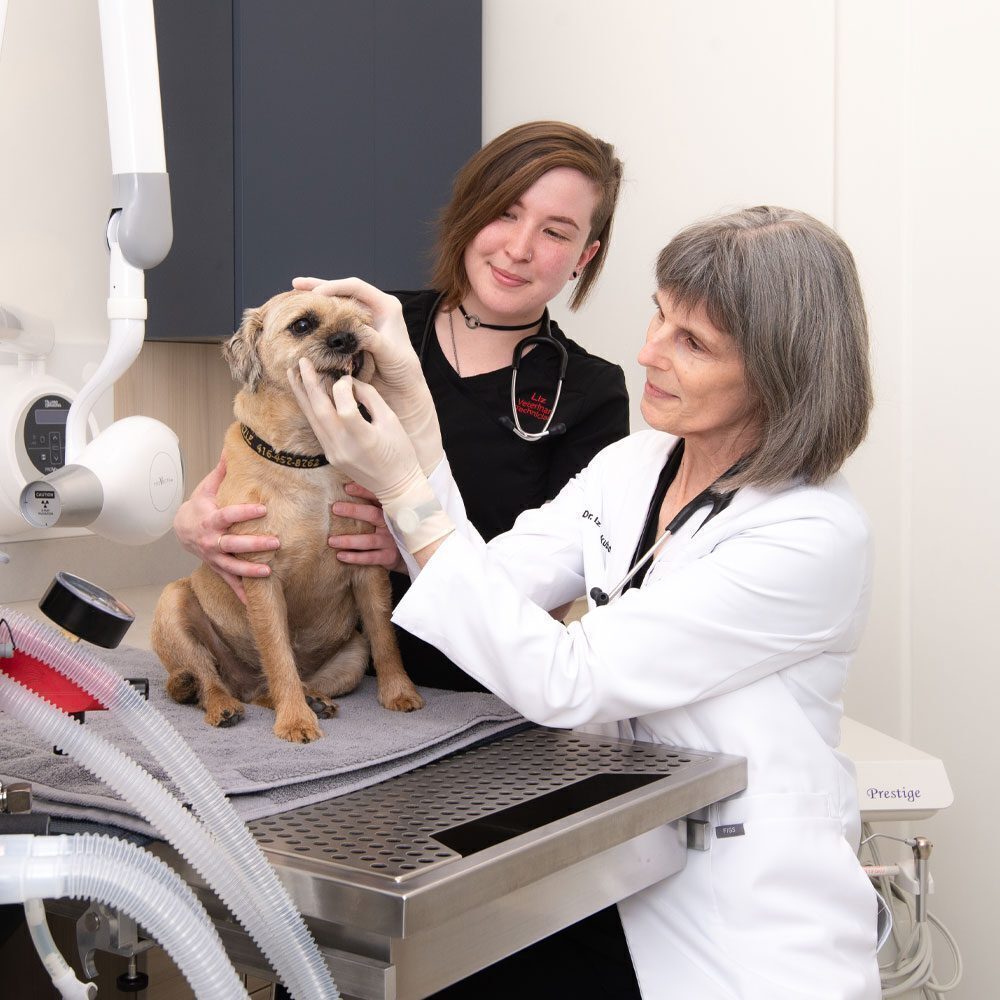
What is Periodontal Disease?
Like us, our pets can be prone to periodontal disease. Periodontal disease (disease of the tissues supporting teeth) is the most common disease among dogs and cats. It’s caused by a buildup of plaque (a sticky film containing bacteria) and tartar (plaque that’s hardened and cemented itself to a tooth) that irritates gums and causes inflammation (gingivitis). Left unattended, tooth roots and their surrounding structures become infected and inflamed and begin to decay and loosen.
Signs of periodontal disease include:
- Bad breath
- Loose teeth
- Sensitivity around the face
- Excessive drooling
- Bleeding from the mouth
- Dropping food
- Weight loss
Like us, our pets can be prone to periodontal disease. Periodontal disease (disease of the tissues supporting teeth) is the most common disease among dogs and cats. It’s caused by a buildup of plaque (a sticky film containing bacteria) and tartar (plaque that’s hardened and cemented itself to a tooth) that irritates gums and causes inflammation (gingivitis). Left unattended, tooth roots and their surrounding structures become infected and inflamed and begin to decay and loosen.
Signs of periodontal disease include:
- Bad breath
- Loose teeth
- Sensitivity around the face
- Excessive drooling
- Bleeding from the mouth
- Dropping food
- Weight loss
How to Prevent Periodontal Disease in Your Pet
Prevention of periodontal disease can be achieved with daily tooth brushing as well as the use of dental diets and/or dental chews and other products designed to help clean teeth. Despite your best efforts, your pet may still develop enough plaque, tartar, and/or gum inflammation to warrant a professional cleaning under a general anesthetic before matters worsen. At routine (or other) visits, we’ll assess your pet’s oral health to let you know when treatment is indicated.

Treating Periodontal Disease
Treatment of moderate to severe periodontal disease involves:
- Placing the patient under general anesthesia
- Cleaning each tooth surface
- Taking dental X-rays to elevate oral health below the gum line
- Probing for problems below the gum line (cavities, root exposure, and so on)
- If necessary, extracting teeth if there's sufficient damage from disease to warrant it
Common Questions About Teeth Cleanings for Pets


“I couldn’t complement the team at Southeast Oakville Veterinary Hospital enough. They took exceptional care of my highly anxious and nervous dog, Rosie, and she felt at home the entire time. We took Rosie in for a dental exam and dental cleaning and we had an amazing experience with Dr. Iz and Dr. Derek – they were professional, caring and generous with their time and support. Rosie’s teeth look great and I would recommend all services offered by the clinic to anyone.”
Josh M.
“Dr. Peters and Dr. Yan did excellent work and gave the utmost care and compassion throughout the experience. Dr. Peters had examined my cat during the consultation and confirmed the need for the extraction, and identified further progression of the issue that would need to be addressed. This primed me for what Dr. Yan would end up explaining just ahead of the actual surgery: my cat unfortunately needed multiple teeth extracted. Not only was Dr. Yan patient as I processed the news and asked questions, but she was clear and informative on the risks of proceeding in various ways. I greatly appreciated her calling me once my cat had been x-rayed, and getting further updates as the day went on - and especially pictures, which was a beautifully thoughtful touch!”