
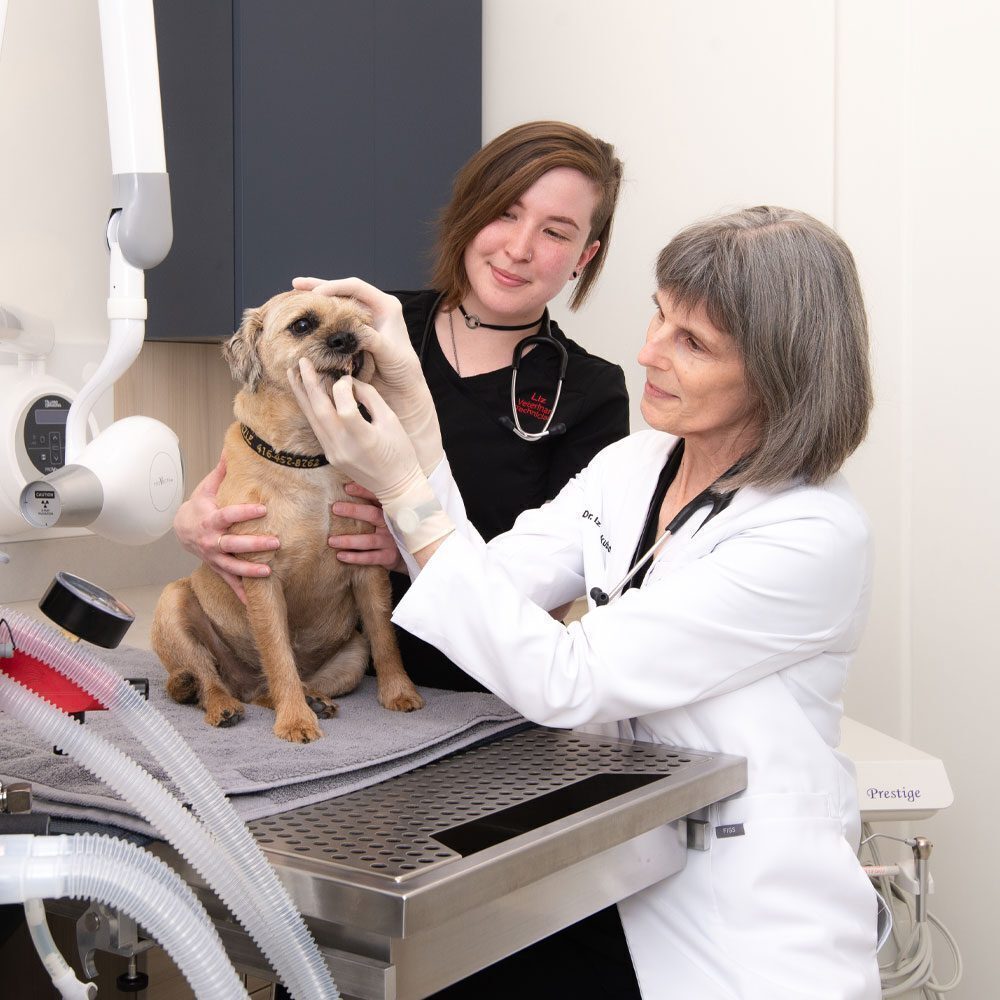
What is Periodontal Disease?
Periodontal disease is one of the most common health conditions affecting dogs and cats. It develops when plaque and tartar accumulate on the teeth, leading to irritation and inflammation of the gums. Over time, untreated dental disease can progress below the gumline, damaging the tissues and structures that support the teeth. In advanced cases, pets may experience pain, infection, loose teeth, and difficulty eating.
Common signs of periodontal disease in pets may include:
- Bad breath
- Loose teeth
- Sensitivity around the face
- Excessive drooling
- Bleeding from the mouth
- Dropping food
- Weight loss
Periodontal disease is one of the most common health conditions affecting dogs and cats. It develops when plaque and tartar accumulate on the teeth, leading to irritation and inflammation of the gums. Over time, untreated dental disease can progress below the gumline, damaging the tissues and structures that support the teeth. In advanced cases, pets may experience pain, infection, loose teeth, and difficulty eating.
Common signs of periodontal disease in pets may include:
- Bad breath
- Loose teeth
- Sensitivity around the face
- Excessive drooling
- Bleeding from the mouth
- Dropping food
- Weight loss
Preventing Periodontal Disease in Your Pet
Good at-home dental habits, including daily tooth brushing and the use of veterinarian-recommended dental diets, chews, and oral care products, can help reduce plaque buildup and support healthier teeth and gums. However, even with consistent home care, many pets still develop tartar accumulation or signs of gum disease that require a professional dental cleaning performed under general anesthesia. During your pet’s routine wellness exams, our veterinary team will evaluate their oral health and recommend treatment when necessary to help prevent more serious dental problems from developing.

Cat & Dog Periodontal Disease Treatment Near Toronto
Treatment of moderate to severe periodontal disease involves:
- Placing the patient under general anesthesia
- Cleaning each tooth surface
- Taking dental X-rays to elevate oral health below the gum line
- Probing for problems below the gum line (cavities, root exposure, and so on)
- If necessary, extracting teeth if there's sufficient damage from disease to warrant it
Common Questions About Teeth Cleaning for Dogs and Cats
Professional dental cleanings are an important part of maintaining your pet’s overall health, but they require specialized care and monitoring to be performed safely and effectively. At our hospital, dog and cat dental procedures are completed with a comprehensive approach designed to thoroughly clean the teeth, evaluate oral health, and keep your pet comfortable throughout the process. Learn more below about what to expect during your pet’s dental cleaning and how our veterinary team performs these procedures.
Veterinary dentistry is very similar to human dentistry. Both require patients to keep still for dental X-rays and to endure high-pitched, high-speed instruments that scrape and polish teeth and clean under the gumline – procedures that no cat or dog will tolerate while awake (which can be difficult for some people, too). General anesthesia allows our patients to sleep through the procedure while we do whatever is warranted (including removing any damaged teeth) safely, properly, and without causing your pet undue distress.
We do everything we can to ensure your pet’s safety: a full physical exam prior to anesthesia, a review of blood work and medical history, anesthetic protocols tailored to your pet, and intravenous fluids and close monitoring during and after the procedure.
Dental X-rays (radiographs) are the only way to evaluate what’s going on below your pet’s gum line. They allow us to:
- See if there’s enough bone loss and damage to a root to warrant removing a tooth
- Identify any risks associated with an extraction
- Determine whether a missing tooth is truly missing or simply failed to erupt; the latter can lead to the development of a cyst (fluid-filled sac) around the tooth that can damage the jawbone if left unattended
- Confirm that an extraction was completed successfully (e.g., no root tips left behind)
We have two types of dental imaging systems: Digital radiography (DR) and computer radiography (CR) to give us the flexibility to choose the one most suited to your pet, be they a small cat or a Great Dane. Compared to traditional film X-rays, both DR and CR require significantly less radiation and produce a higher-quality image.
DR uses smaller plates on which images are projected, and is suited to small-to-medium-sized pets. CR provides larger plates and is more suited to large-to-giant-sized dogs. With CR, we don’t need as many plates to get a complete picture, which means less radiation and shorter anesthetic time for those breeds.
Ontario law prohibits anesthesia-free dentistry by non-veterinarians because it’s a disservice to the pets receiving them. Lay people offering these cleanings get around the law by offering “cosmetic” cleanings. In other words, this is just a superficial scraping of the teeth. Cosmetic cleanings leave owners with a false impression about their pet’s oral health, and they set pets up for failure (dental disease progresses below the gum line unhindered, leading to oral discomfort and tooth loss).


“I couldn’t complement the team at Southeast Oakville Veterinary Hospital enough. They took exceptional care of my highly anxious and nervous dog, Rosie, and she felt at home the entire time. We took Rosie in for a dental exam and dental cleaning and we had an amazing experience with Dr. Iz and Dr. Derek – they were professional, caring and generous with their time and support. Rosie’s teeth look great and I would recommend all services offered by the clinic to anyone.”
Josh M.
“Dr. Peters and Dr. Yan did excellent work and gave the utmost care and compassion throughout the experience. Dr. Peters had examined my cat during the consultation and confirmed the need for the extraction, and identified further progression of the issue that would need to be addressed. This primed me for what Dr. Yan would end up explaining just ahead of the actual surgery: my cat unfortunately needed multiple teeth extracted. Not only was Dr. Yan patient as I processed the news and asked questions, but she was clear and informative on the risks of proceeding in various ways. I greatly appreciated her calling me once my cat had been x-rayed, and getting further updates as the day went on - and especially pictures, which was a beautifully thoughtful touch!”