

How Laparoscopic Spay Benefits Your Dog
There are many benefits to choosing laparoscopic spay for your dog, with the most significant being:
- Less pain
- A faster and more comfortable recovery
- Less time spent under anesthesia
- Minimally invasive (a single, small incision instead of a large one)
- Better visualizing of the abdomen (via a camera sending real-time images to a large computer monitor)
- Fewer post-op complications

How We Perform Laparoscopic Spays
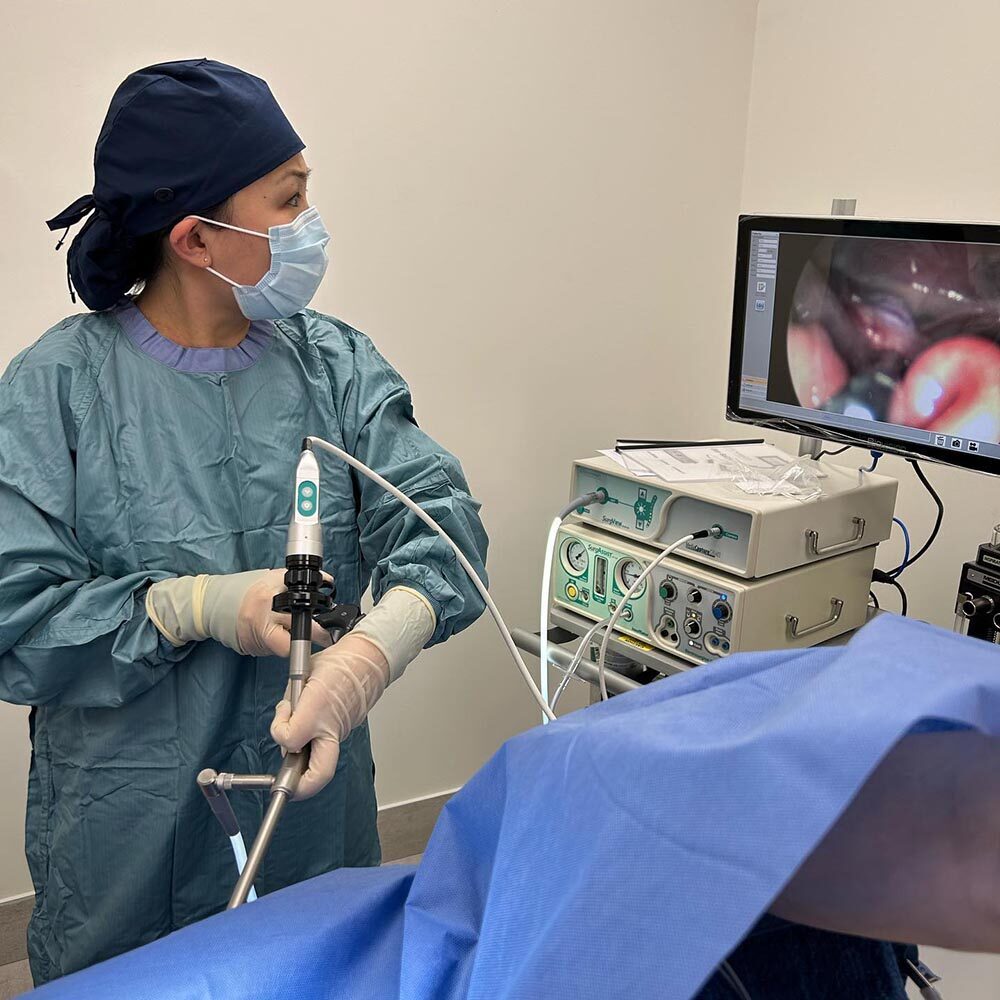
After your dog is placed under general anesthesia, we make a small incision—about the size of a dime—in the abdomen. Through this opening, we insert a laparoscope, a thin instrument equipped with a light and camera. The camera projects clear, magnified images of the internal organs onto a screen, giving the surgeon an enhanced view for precise and safe surgery.
Unlike traditional methods that use multiple incisions and separate tools, our single-port system combines everything into one instrument. This advanced tool allows us to cut, cauterize, and visualize—all through one small incision—making the procedure more efficient and reducing surgical time, discomfort, and recovery.
Laparoscopic Surgeries We Offer to Toronto Pets
In addition to canine spays, laparoscopy is suited for use in numerous surgical procedures for both dogs and cats, including:
- Cryptorchid neuters (removal of a testicle that failed to descend to the scrotum and remains in the abdomen, a condition referred to as cryptorchidism)
- Gastropexies (attaching the stomach to the abdominal wall to prevent life-threatening stomach twisting and bloat in certain dog breeds)
- Liver biopsies
- and more…
How We Sterilize Our Laparoscopic Endoscopes
Southeast Oakville Veterinary Hospital is among the first general veterinary practices in Canada to adopt a Hydrogen Peroxide Plasma sterilizer to sterilize our endoscopes. It’s significantly safer and more environmentally friendly than the traditional alternatives that use ethylene oxide gas, a greenhouse gas that’s highly flammable and carcinogenic.

"I recently took my 1 year old dog to Southeast Oakville Veterinary Hospital for a laparoscopic spay and gastropexy and I was very impressed! I was coming from hours out of town because most clinics don't offer this service and it was definitely worth the drive. It's a beautiful and clean new facility and all of the staff were very friendly and welcoming. The communication with everyone in the clinic was easy and my questions about the procedure were addressed quickly with all of the information I needed. It's obvious that the staff love what they do but also where they work and I felt very comfortable leaving my puppy with them for the day. The surgery was great and her recovery was very smooth. I highly recommend taking your pets here - it was a great experience!"
Stephanie R
“It is my pleasure to provide a Five Star review for Southeast Oakville Veterinary Hospital. From the very first time I dropped in – to say welcome to the neighbourhood and get a tour of their beautiful new clinic – to every visit since, it has been nothing but a series of great experiences. Dr. Peters, Dr. Yan and Dr. Jakubowski have all provided stellar care to our Jolene (dog) and Angel (cat). Jolene’s laparoscopic spay and gastropexy went very smoothly with minimal scarring. And we’ve always been able to get an appointment when needed without any delay.
In addition, the staff (all of them…I won’t name names in case I leave someone out) are warm, caring and knowledgeable. Across the board.
I feel very fortunate to have SOVH nearby and have no hesitation in recommending them highly to anyone looking for a vet for their furry family members.”